
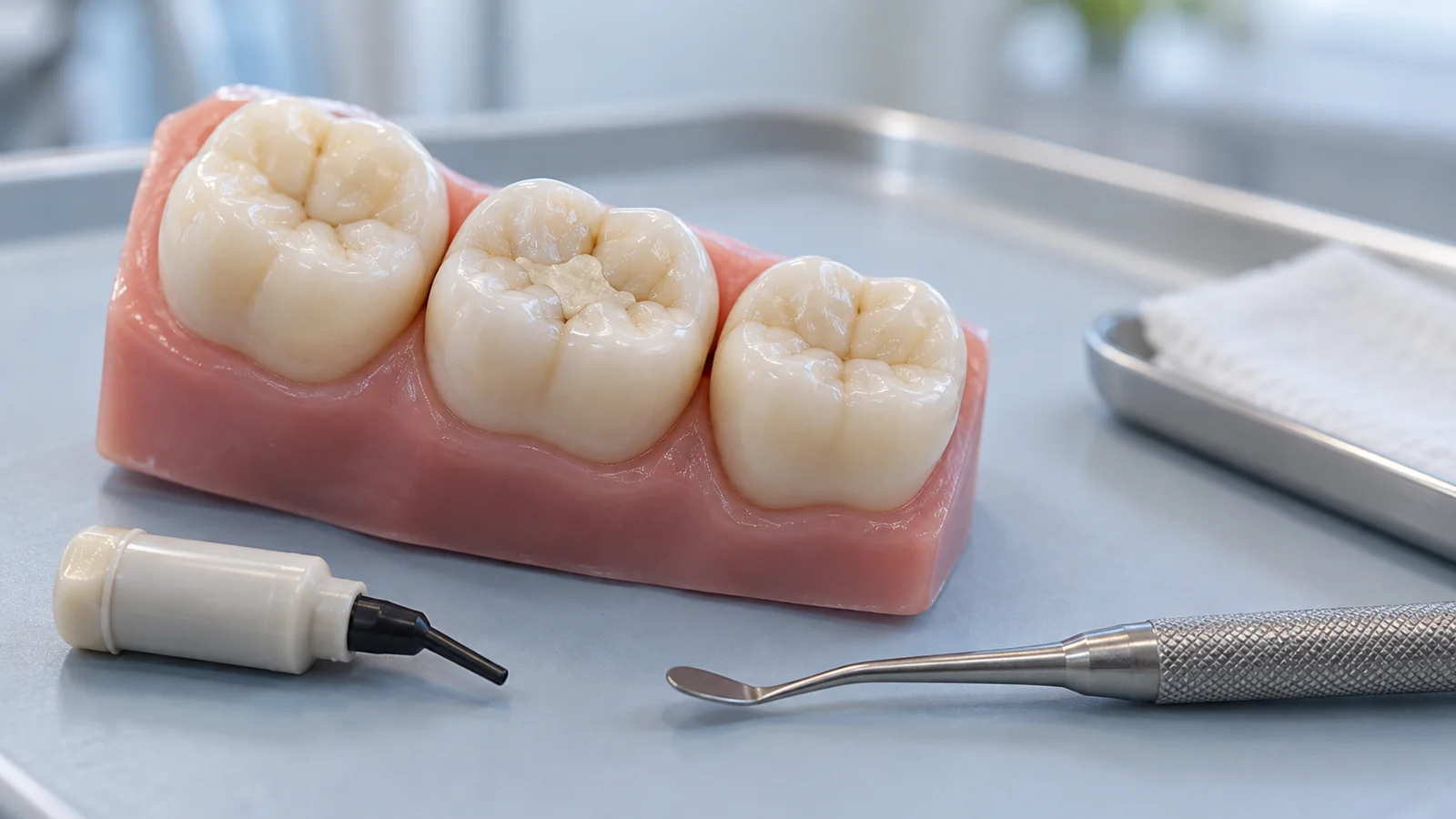
Need a cavity checked or an existing filling assessed? Bayfront Dental provides tooth-colored fillings at 224 Southeast 1st Street in Downtown Miami. An examination helps determine whether a composite filling can repair the tooth or whether another option would protect it better.
Enjoy A More Natural Smile With Composite Dental Fillings
Composite dental fillings use tooth-colored material to repair certain cavities and small areas of damage. At Bayfront Dental, we consider the tooth’s condition, your bite and the appearance of the restoration when discussing treatment. Suitability, cost and durability vary; a filling is not the right repair for every tooth.
Dental fillings for tooth restoration
At Bayfront Dental Miami, we plan tooth-colored restorations for fit, function, and appearance. Fillings can wear or fracture and may need repair or replacement over time. Our goal is to create results that are designed to be virtually undetectable. We use tooth-colored fillings as restorations when our patients have:
- Tooth decay
- Chipped teeth
- Cracked teeth
How Do I Know If I Need A Filling?
Tooth sensitivity has several possible causes, including decay, cracks, worn fillings or exposed tooth surfaces. Early decay may cause no symptoms, so pain alone cannot tell you whether you need a filling. When you come in for an evaluation, our team directs you to the appropriate dental treatment for your situation. A filling may be suitable for certain cavities, chips, or damaged areas. A tooth with more extensive damage may need an inlay, onlay, crown, or another treatment.
Cavity Prevention — What Can I Do To Prevent The Need For A Filling?
The best way to fight cavities and maintain healthy gums and teeth is to keep up on your daily habit of proper oral hygiene. Here are 5 ways to ward off tooth decay and prevent cavities:
- Come in to our office for a comprehensive oral exam and regular cleanings.
- Brush twice a day with fluoride toothpaste.
- Drink more water and cut back on sugary and acidic drinks.
- Clean between your teeth daily with floss or another suitable interdental cleaner.
- Avoid smoking.
Dental Fillings—the Process
The procedure for placing a composite resin dental filling is a routine treatment that we do every day at Bayfront Dental Miami. Here’s how it works:
- Our team isolates the tooth from saliva to keep it dry.
- Any dental decay is removed.
- An etchant and a bonding agent are applied, followed by the composite resin.
- A special light is used to harden each layer of composite resin material.
- After the tooth is filled, the composite resin is shaped to resemble a real tooth.
- Finally, the restoration is smoothed and polished to accommodate your bite.
What’s The Difference Between A Filling And An Inlay/Onlay?
A filling does what it says it does—it is filling in a cavity, a hole that has been created by decay or trauma, essentially restoring normal tooth anatomy. When we create a filling from composite resin, we shade the white material so that it blends naturally with your surrounding tooth structure. The result is a restoration that is practically invisible.
Inlays and onlays are used when the damage or decay to a tooth requires more than a filling—but less than a crown. In other words, if your tooth does not have enough tooth structure for a filling but it is not so severely damaged that it warrants a crown, you may be an excellent candidate for an inlay or onlay.
Made of porcelain, an inlay is crafted at a dental lab by an expert ceramist and cemented into or onto the center of the tooth, inside the cusp tips of the tooth. An onlay covers the top chewing surface of the tooth. Porcelain can resemble natural enamel, but a restoration can chip or wear and may need repair or replacement.
What Are Composite Resin Fillings And Restorations?
Composite resin fillings are the most common alternative to dental amalgam. They are sometimes called “tooth-colored” or “white” fillings because of their color. Composite resin fillings are made of a type of plastic (an acrylic resin) reinforced with powdered glass filler. Composite resin is often placed in layers to build up the final restoration, then hardened with a dental curing light that uses visible light. This light energy speeds up a chemical reaction of the components causing the soft material to harden and bond to the tooth. This material is considered safe. The color (shade) of composite resins can be customized to closely match surrounding teeth. This plastic and glass mixture contains no metal and can be shaped to resemble a real tooth. It is usually hard to tell that a tooth has even been filled!
Composite resin fillings have several advantages. The “white” color is preferred by many patients due to its ability to blend in with surrounding teeth. It is also possible to make more conservative preparations when using composite material, thus enabling the dentist to preserve more natural tooth structure.
- Benefits of Composite Resin Restorations
- Preferred white/natural-looking color
- Better for smaller fillings
- Preservation of more tooth structure
Properties vary among tooth-colored filling materials; fluoride release is not a feature of every composite. Your dentist selects a material for the tooth and the size and location of the restoration. Fillings still need daily cleaning and regular checks.
How do composite and amalgam fillings compare?
Composite and amalgam fillings have different benefits and limitations. Material choice depends on the tooth, the repair needed, and your health history. The FDA recommends considering non-amalgam options for certain higher-risk patients when those materials are appropriate. Discuss allergies, medical concerns, and alternatives with your dentist.
The FDA advises against removing an intact amalgam filling with no decay beneath it unless a health professional identifies a medical reason. Replacing a sound filling can remove healthy tooth structure. Ask your dentist to assess the existing filling before deciding on replacement.
We are excited to be able to restore decayed teeth to their optimal appearance and function with fillings, inlays, and onlays. At Bayfront Dental Miami, we use dental fillings to help adult and pediatric patients preserve their healthy, beautiful teeth and avoid additional damage.
The result of high-quality composite fillings is a beautiful, healthy smile. For more information about our dental fillings, call our office today! Bayfront Dental Miami Phone Number (305) 530-1866
Dental Fillings In Downtown Miami
Our only office is at 224 Southeast 1st Street in Downtown Miami. If you live or work Downtown, ask which appointment to book for a suspected cavity or damaged filling and how much time to allow. Examination findings guide the recommended repair and the timing of treatment.
Coming from Brickell or Edgewater Miami? Our neighborhood guides help you plan a visit to the Downtown office. We also welcome patients from Midtown Miami, Wynwood, Little Havana, Key Biscayne, Coral Gables, Coconut Grove and Miami Beach. These are areas we serve, not additional office locations.
What To Expect At Bayfront Dental
- Diagnosis with exam and imaging when needed
- Removal of decay and placement of tooth-colored material when appropriate
- Bite check and home care guidance after treatment
Frequently Asked Questions About Dental Fillings
Are tooth-colored fillings available for front and back teeth?
Bayfront Dental provides tooth-colored composite fillings when appropriate. They can be used for certain repairs in front or back teeth. The size and location of the cavity, the remaining tooth structure and your bite help your dentist decide whether a filling or another restoration is suitable.
Can a filling fix every cavity?
No. Early decay without a cavity may sometimes be managed with preventive care, while a tooth with more extensive damage may need an inlay, onlay, crown or another treatment. An examination and imaging when needed help identify the problem. The team will explain the findings, options and next steps before you decide.
What affects the cost of a dental filling in Downtown Miami?
The material, size and location of the repair affect the treatment recommendation and cost. Ask for a written estimate and whether examination or imaging charges are separate. If you have dental insurance, confirm your benefits and expected out-of-pocket amount with the office and your insurer before treatment; coverage for tooth-colored materials varies by plan.
How long does a filling appointment take?
The time needed varies with the repair and the number of teeth involved. Ask how much time to reserve and whether your examination and treatment will be separate appointments. Do not assume that a first consultation includes treatment that day.
Will I need numbing for a filling?
Your dentist will discuss whether local anesthesia is appropriate to numb the treatment area. Share your medical history, allergies and concerns about dental visits with the team beforehand. If you feel discomfort during treatment, let the dentist know so it can be assessed.
When can I eat after a filling?
Follow the aftercare instructions for your restoration. If your mouth is numb, wait until normal feeling returns before chewing to help avoid biting your cheek, lip or tongue. Ask the team about eating and drinking before you leave if anything is unclear.
How long do composite fillings last?
No filling lasts forever. Fillings can wear or fracture and may need repair or replacement. Daily cleaning and regular dental checks remain important even when the tooth feels comfortable. Ask your dentist about the condition of your filling rather than relying on a guaranteed lifespan.
What if my filling breaks, feels high or hurts?
Call if a filling breaks, comes out, feels high or causes persistent pain. An uneven bite may need adjustment; do not reshape the filling yourself. Seek prompt dental advice for severe pain, swelling or fever.
How do I arrange a visit from Downtown Miami or Brickell?
Use the appointment link below or call (305) 530-1866. Tell the team whether you need an examination, have a damaged filling or were advised to have a cavity treated. All visits take place at our Downtown Miami office at 224 Southeast 1st Street; confirm the appointment type and availability when booking.
Related Bayfront Dental Resources
For additional background, see the ADA’s overview of filling options and NIDCR’s dental fillings information. Your dentist’s advice is based on your examination and individual needs.