
See how in-office dental 3D printing can support custom restorations, appliances, models, and treatment tools.
Advanced dental technology
At Bayfront Dental in Downtown Miami, our team is introducing in-office dental 3D printing with the SprintRay Pro 2 and SprintRay Midas systems. Dr. Taylor Light, DDS, Dr. David Weiner, and the Bayfront Dental team can use digital scans and dental materials selected for a specific clinical purpose to help plan or make certain restorations, appliances, models, and treatment tools.
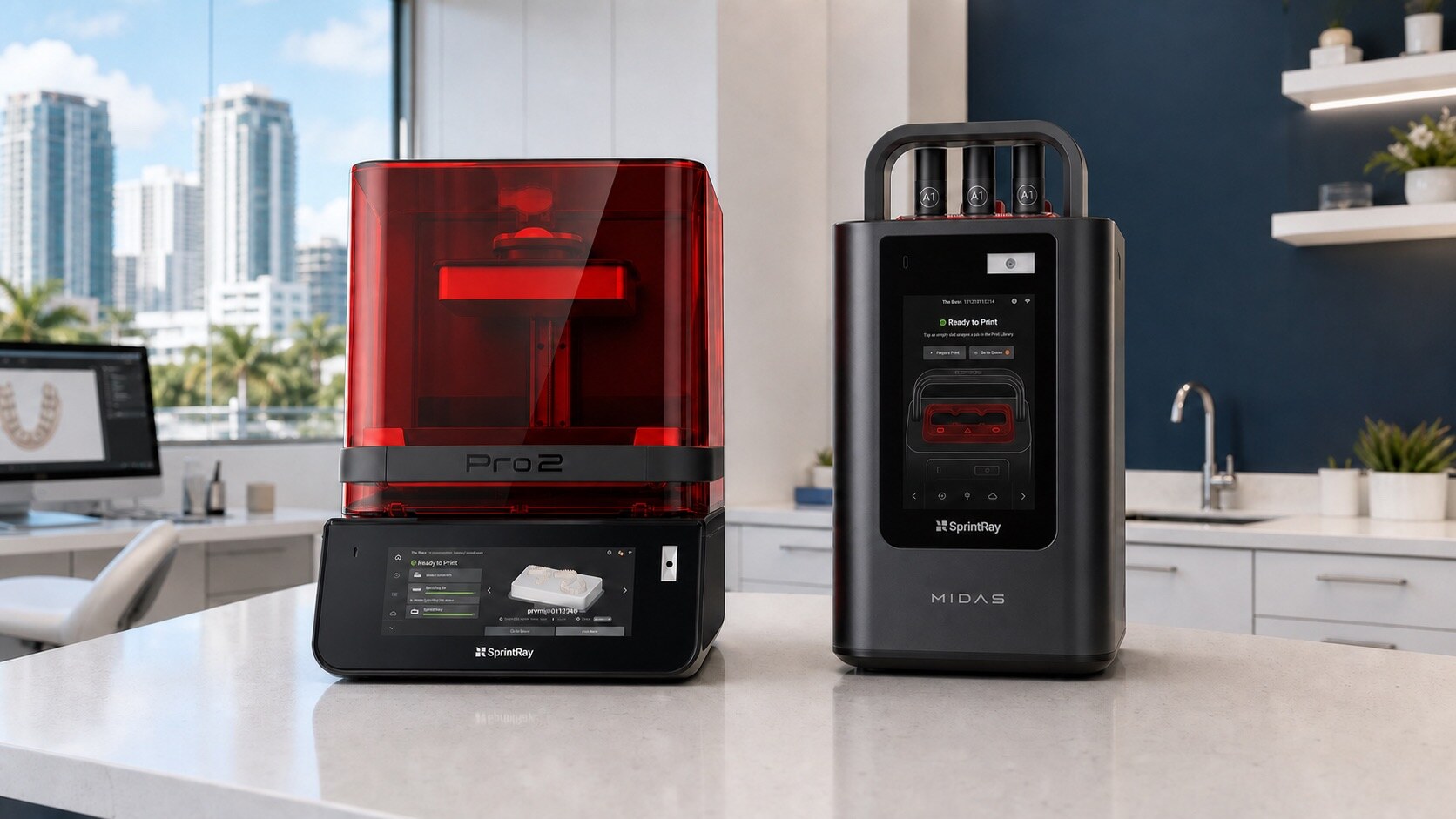
In simple terms, this technology can turn a detailed digital design into a custom dental item inside the practice. It may reduce some outside laboratory steps and help make the workflow more efficient. The right treatment, material, and timeline always depend on an examination and the needs of the individual patient.
What is dental 3D printing?
A dental 3D printer builds a physical dental item in very thin layers from a digital design. We first capture detailed information about your teeth and bite, often with an intraoral scanner such as our iTero digital impression system. A dental design is then prepared for the restoration, appliance, model, or guide that has been prescribed.
The printer uses a dental material chosen for that particular purpose. After printing, the item goes through the required washing, curing, finishing, and quality checks. Your dentist examines the fit, shape, surface, and clinical details before anything is delivered or used. Think of the process as turning a precise digital model of your mouth into a custom physical dental item.
How the digital dental workflow works
- Examination and planning: Your dentist evaluates your teeth, gums, bite, and treatment goals to determine whether a digital workflow is appropriate.
- Digital scan: A small intraoral scanner captures the shape of the treatment area without relying on a traditional putty impression in many eligible cases.
- Custom design: The scan is used to prepare a digital design based on the prescribed dental treatment.
- 3D printing: The selected printer and compatible material build the item layer by layer.
- Finishing and inspection: The printed item is washed, cured, finished, and checked before it is tried in, placed, or used as part of treatment.
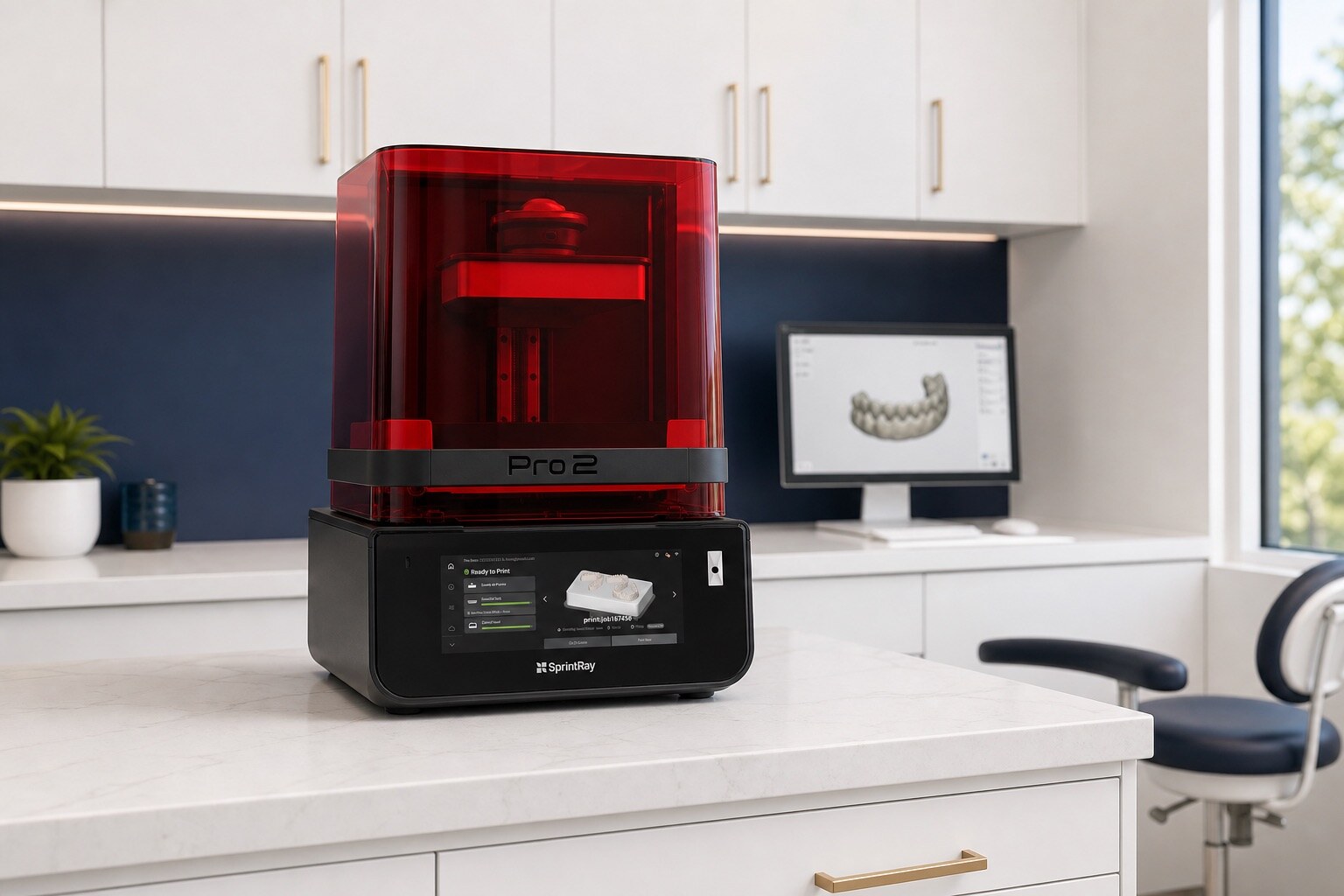
SprintRay Pro 2: appliances, models, and treatment tools
The SprintRay Pro 2 is designed for a broad range of dental 3D printing workflows. Depending on the clinical need, design, material, and approved use, the system can support:
- Dental models used for diagnosis, treatment planning, and aligner workflows
- Night guards and other occlusal appliances
- Surgical guides used to help plan implant placement
- Denture bases, denture teeth, and selected denture workflows
- Sports guards and directly printed clear retainers
- Selected crowns, inlays, onlays, veneers, and related restorative workflows
The printer does not replace clinical judgment. Each item still requires a prescription, the correct material, proper post-processing, and a dentist’s inspection.
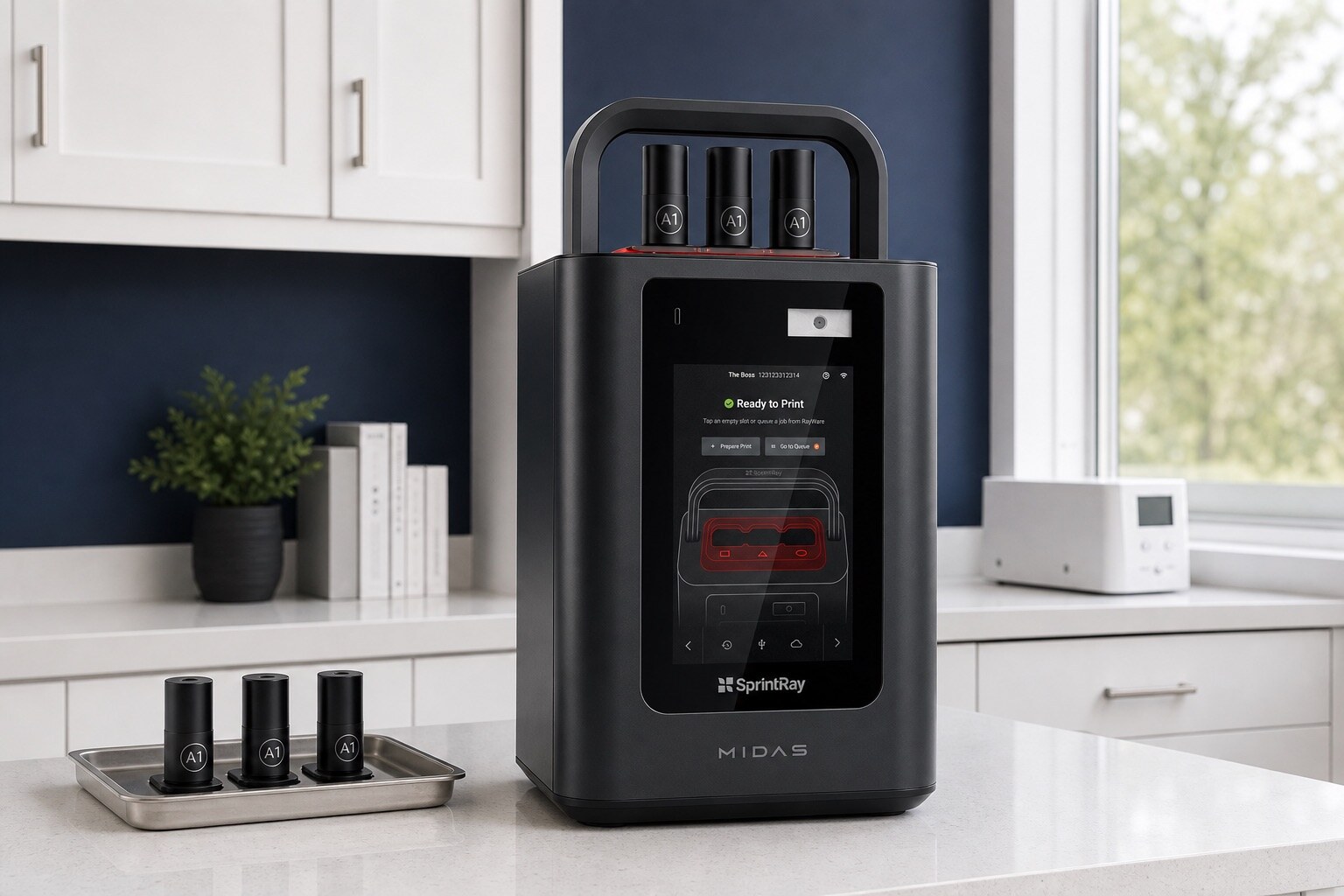
SprintRay Midas: selected custom restorations
SprintRay Midas is a chairside restorative 3D printing system. Instead of an open bottle and reusable resin tank, it uses sealed, single-use material capsules. The printer verifies the capsule information and uses a controlled process to form the prescribed restoration.
With a compatible material and an appropriate case, Midas can support custom dental crowns, inlays and onlays, selected veneer restorations, and other eligible restorative work. When porcelain is the better material for a patient, the dentist may instead recommend traditional porcelain veneers. The exact option is chosen only after the dentist considers the tooth, bite, appearance, material indication, and long-term treatment needs.
What dental work can this technology support?
Dental 3D printing is not one treatment. It is a production tool that can be used within several dental workflows. At Bayfront Dental, possible uses may include custom models, guards, retainers, surgical guides, denture components, and selected restorations such as crowns, inlays, onlays, or veneers. Availability depends on the treatment plan and the materials indicated for that use.
For dental implant care, the printer does not make the titanium implant that is placed in the jaw. It may be used to create a surgical guide or selected prosthetic components that support an implant treatment plan.
What may in-office dental 3D printing mean for patients?
- A digital starting point: A detailed scan can replace a traditional impression for many eligible procedures.
- A more connected workflow: Scanning, designing, printing, and quality checks can be coordinated by the dental team.
- Potentially faster turnaround: Bringing selected steps into the practice may reduce waiting for an outside laboratory in appropriate cases.
- Custom design: The item is planned for your teeth, bite, and prescribed treatment rather than selected as a one-size-fits-all product.
- Hands-on quality control: The dentist checks the printed item and makes clinical decisions before it is used or delivered.
Can dental 3D printing support same-day crowns?
It may support a same-day dental restoration in an eligible case, but same-day treatment is not automatic or guaranteed. The condition of the tooth, the need for other treatment, the complexity of the design, the chosen material, finishing requirements, and the dentist’s final fit check all affect timing. Some crowns and other restorations are best completed over more than one visit or with the help of a dental laboratory.
If you are interested in a faster restorative option, ask during your examination. The team will explain what is realistic for your specific tooth rather than promise a timeline before evaluating it.
Who may be a candidate?
Candidacy depends on the dental work you need. A digital workflow may be considered for patients who need a custom appliance, model, guide, or eligible restoration. Healthy supporting teeth and gums, enough tooth structure, bite forces, grinding habits, appearance goals, and other oral health factors may affect the recommendation. A comprehensive evaluation is the only way to know whether a printed item or another approach is the better choice.
Dental 3D printing near Brickell and Downtown Miami
Bayfront Dental is located at 224 Southeast 1st Street in Downtown Miami, convenient to Brickell and nearby communities including Edgewater, Midtown Miami, and Wynwood. Patients looking for digital dentistry in Miami can ask our team how SprintRay Pro 2 and Midas technology may fit into a personalized treatment plan.
Frequently asked questions about dental 3D printing
What is in-office dental 3D printing?
It is a digital process that lets a dental team turn a custom computer design into a physical restoration, appliance, model, or treatment tool inside the practice. The item is printed in thin layers and then finished and checked before use.
What can Bayfront Dental make with a dental 3D printer?
Possible uses include dental models, night guards, retainers, sports guards, surgical guides, denture components, and selected crowns, inlays, onlays, veneers, or other restorations. The exact applications depend on the clinical need, printer, material, and approved indication.
Can I receive a same-day crown?
Some eligible cases may be completed more quickly or on the same day, but this is not guaranteed. Your dentist must first evaluate the tooth, bite, material needs, design complexity, and finishing requirements.
Can a 3D-printed crown be a long-term restoration?
Some dental 3D-printing materials are intended for definitive restorations. Whether one is appropriate for your tooth depends on the material’s specific indication and your clinical needs. Your dentist will explain the recommended option and alternatives.
Are dental 3D-printing materials safe?
Dental materials must be selected for their intended use and processed according to the required workflow. Bayfront Dental will use compatible materials indicated for the prescribed application and will inspect the finished item before it is delivered or used.
Does the printer make dental implants?
No. The printer does not make the titanium implant placed in the jaw. It may create a surgical guide or selected prosthetic components that support implant planning and restoration.
Will I still need a digital scan?
Usually, yes. A detailed digital scan gives the team the shape and bite information needed to design a custom item. Additional X-rays, photographs, or records may also be needed depending on the treatment.
How long does dental 3D printing take?
The printing time is only one part of the process. Examination, scanning, design, printing, washing, curing, finishing, and the dentist’s fit check all take time. The team can give you a realistic estimate after evaluating your case.
Is dental 3D printing right for every patient?
No. It is one possible workflow, not the best answer for every person or every tooth. Your oral health, bite, treatment goals, material options, and case complexity determine whether it is appropriate.
Does dental insurance cover 3D-printed dental work?
Coverage is generally based on the dental procedure and your plan, not simply on how an item is made. Benefits, deductibles, limitations, and exclusions vary. Our team can help you understand the information available from your plan.