
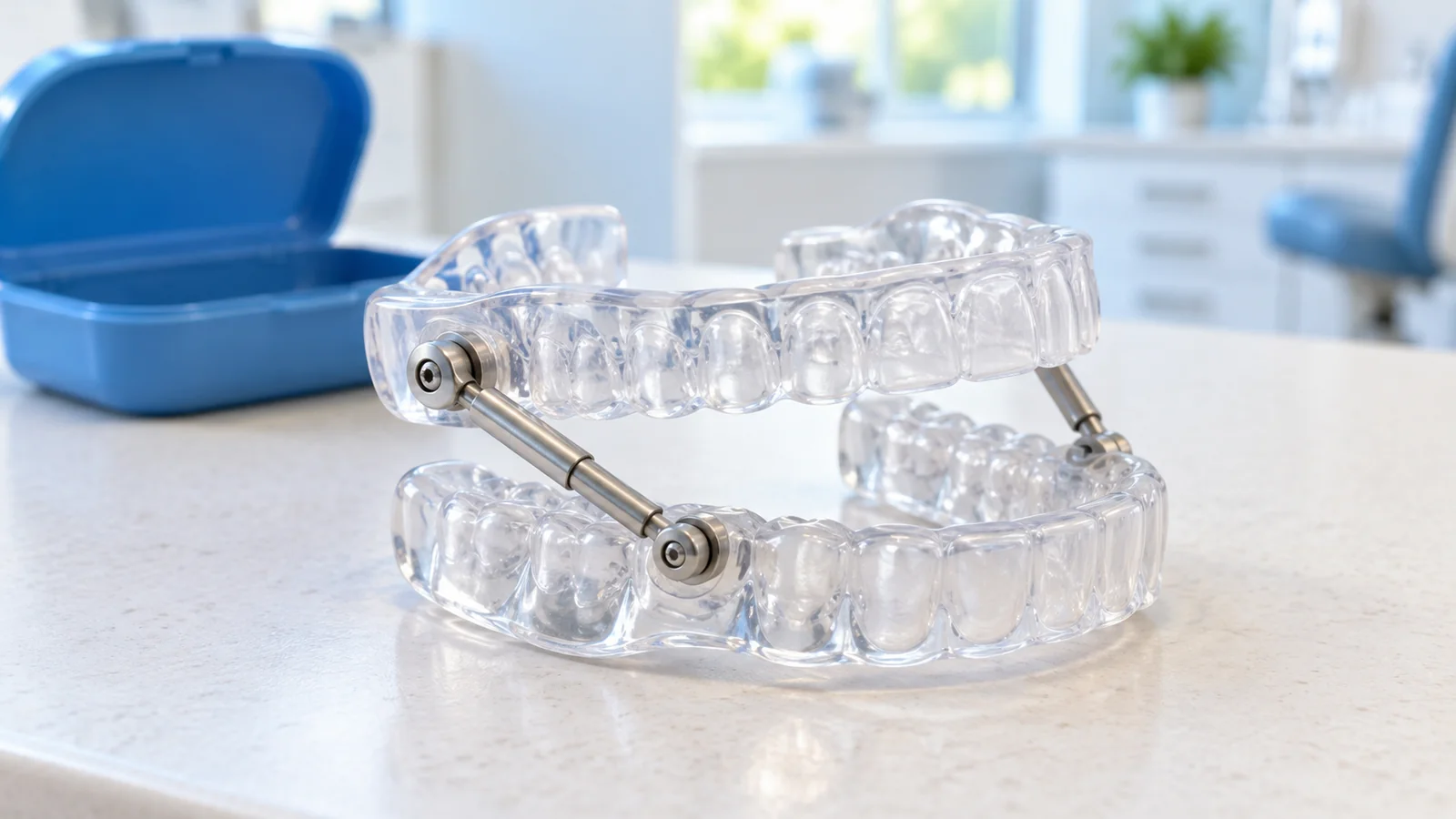
An oral appliance can be an option for selected adults with obstructive sleep apnea, but choosing one starts with a medical diagnosis and a treatment discussion—not buying a mouthguard. A sleep physician and a qualified dentist have different, complementary roles in deciding whether it is appropriate and checking how well it works.
If you already use CPAP or another prescribed treatment, discuss any proposed change with the clinician managing your sleep apnea before switching. A more convenient-looking device is not automatically the right substitute.
Have I had the right sleep assessment?
Snoring does not tell you by itself whether you have obstructive sleep apnea or how severe it is. The National Heart, Lung, and Blood Institute explains that sleep studies help establish the type and severity. Ask who will review your symptoms and testing, and whether your existing results answer the current questions.
This article focuses on appliances for adult obstructive sleep apnea. It should not be used to choose treatment for central sleep apnea, a child’s breathing problem or unexplained daytime sleepiness.
Why might an appliance be considered instead of CPAP?
The AASM and AADSM oral-appliance guideline supports considering an appliance when an adult with obstructive sleep apnea cannot tolerate CPAP or prefers an alternative after discussion. CPAP generally does a better job of controlling measured breathing events and oxygen levels; an appliance is not equivalent for every person.
Ask what makes you a candidate, which alternatives are reasonable, and what the plan would be if the appliance does not control your condition adequately. Difficulty with CPAP is worth discussing with your sleep clinician rather than simply abandoning treatment.
What is different about a sleep-apnea appliance?
One common design holds the lower jaw forward to help keep the airway open during sleep. The NHLBI’s treatment overview describes different oral devices and the role of professional fitting. A routine sports guard or tooth-grinding guard is not automatically a treatment for sleep apnea.
When an appliance is prescribed, ask whether it is custom-made and adjustable, who will fit it, and how adjustments will be supervised. Do not assume a device’s appearance, a product advertisement or quieter snoring establishes that it is treating your breathing disorder.
How will we check effectiveness and dental effects?
Follow-up is part of treatment, not an optional extra after delivery. The AASM/AADSM guideline recommends follow-up sleep testing to assess effectiveness, along with ongoing visits with the sleep physician and qualified dentist.
The ADA describes potential dental effects, including jaw discomfort, changes in how teeth meet, saliva changes and tissue irritation. Ask how your teeth, gums, bite and jaw will be assessed before treatment and monitored afterward. Report discomfort or bite changes to the treating team rather than making unsupervised adjustments.
Practical questions before you commit
- Who is responsible for the diagnosis, fitting, adjustments and follow-up testing?
- What appointments and records are needed before making the appliance?
- What is included in the estimate, and what may cost extra?
- How should I check my specific insurance benefits and authorization requirements?
- Who should I contact if the appliance is uncomfortable, damaged or no longer fits?
Write down the answers so the medical and dental parts of the plan are clear. Do not assume that an advertised appliance price includes testing, later adjustments or replacement, or that coverage is guaranteed.
Frequently asked questions
Can my dentist diagnose sleep apnea from looking at my mouth?
A dental examination can identify concerns and support a referral. It does not replace the medical assessment and appropriate sleep testing used to diagnose the condition.
If my snoring improves, does that prove treatment works?
No. Symptoms are useful to discuss, but follow-up testing is needed to assess control of sleep apnea. Ask your sleep clinician how effectiveness will be measured.
Is an appliance suitable for everyone?
No. Medical findings, dental health and individual circumstances matter. The treating professionals should explain why it is—or is not—a reasonable option for you.
Start the conversation in Downtown Miami
Bayfront Dental’s sleep apnea information explains the practice’s role in discussion, referral and possible oral-appliance care. The office is at 224 Southeast 1st Street in Downtown Miami. Call (305) 530-1866 or request an appointment to ask about the appropriate next step.
This is general education, not a diagnosis, device prescription or instruction to change existing treatment.