
Gums that bleed when you brush are worth discussing with a dentist, even if they do not hurt. Bleeding can have more than one cause, and a symptom by itself cannot tell you whether you need a change in brushing technique, gum treatment or another kind of evaluation.
The useful question is not just “How do I stop the bleeding?” It is “What is causing it, and what care does my mouth need?” An examination helps answer that without guessing from a photograph or choosing a product first.
Why bleeding gums need context
The ADA’s bleeding-gum guidance describes several possibilities, including early gum inflammation, brushing too firmly, changes in flossing habits and medication effects. If the bleeding happens regularly or worries you, arrange a professional evaluation rather than assuming the cause.
Let the dental team know when you first noticed it, whether it happens around one tooth or throughout your mouth, and whether you also notice swelling, soreness or a persistent bad taste. These details do not establish a diagnosis, but they give the examination a useful starting point.
What a gum evaluation may include
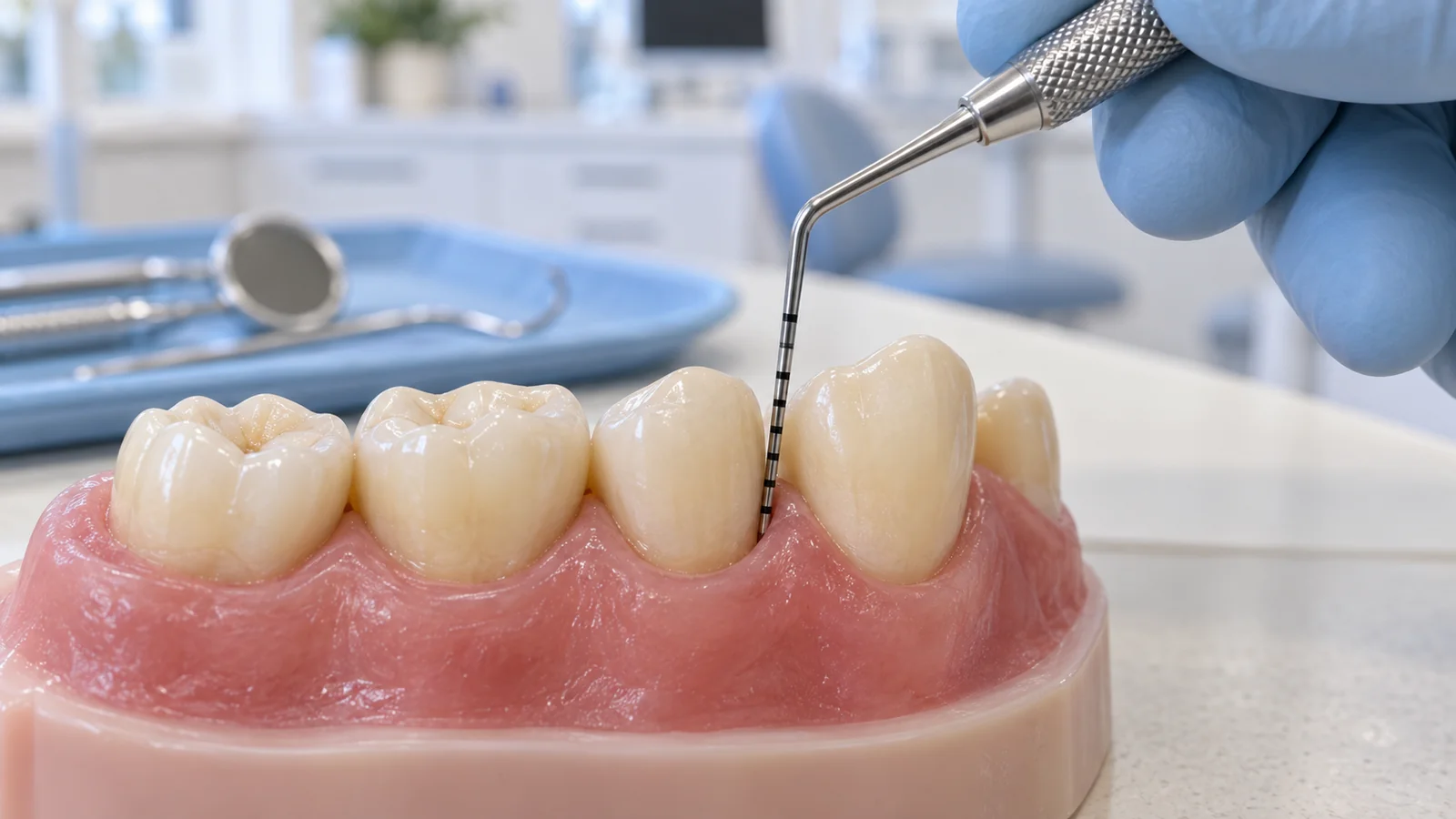
NIDCR’s gum-disease overview describes checking the gums for inflammation and recession, measuring the spaces around teeth with a small probe, reviewing medical history and using X-rays when needed to assess supporting bone. The dentist may also check whether teeth are loose.
Gum measurements are part of that overall assessment. One number is not a home diagnostic test, and bleeding alone does not tell you which cleaning or treatment is appropriate. Ask the dentist to explain what the findings mean together and whether comparison with earlier records would be useful.
Bring the details that might otherwise get missed
Before your appointment, write down the following for a private conversation with the dental team:
- The pattern: Does bleeding happen only during brushing or cleaning between teeth, or at other times too?
- Recent changes: Have you changed your toothbrush, cleaning routine or a dental appliance?
- Your health information: What medicines do you take, and has your medical history changed?
- Previous gum care: Have you had gum treatment or been advised to attend maintenance visits?
- Your main concern: Are you worried about pain, losing a tooth, the appointment itself or the cost of treatment?
You do not need to interpret these details yourself. Bringing them together helps you explain the problem clearly and avoids relying on memory once you are in the chair.
What to do while arranging care
Use a soft-bristled toothbrush and gentle technique; ask the team to demonstrate cleaning around areas that bleed. The ADA recommends regular brushing and cleaning between teeth, but the right approach for a sore or difficult area should be discussed with your dentist. Scrubbing harder is not a useful substitute for that conversation.
Do not stop or change a prescribed medicine because you suspect it contributes to bleeding. MedlinePlus advises discussing medication changes with the prescribing professional. It also recommends contacting a healthcare professional for severe or ongoing bleeding, bleeding that continues after treatment, or other unexplained symptoms. Bleeding that will not stop needs prompt medical advice, not a routine online appointment request.
Frequently asked questions about bleeding gums
If there is no pain, can I ignore it?
No pain does not explain the bleeding. The ADA advises speaking with a dentist when gums bleed easily or during brushing. Describe what you have noticed and ask how soon to be assessed.
Does bleeding mean I need a deep cleaning?
Not automatically. The recommendation depends on the examination. If that treatment is proposed, ask which findings support it. Our regular cleaning versus deep cleaning guide explains the questions to bring without assuming either option is right for you.
What should I understand before leaving?
Ask for the cause the dentist has identified, the recommended care and the follow-up plan. Also ask what changes should prompt you to call sooner. Those answers are more useful than leaving with a product name but no explanation.
Discuss your gum health in Downtown Miami
Bayfront Dental offers gum-health evaluation and care at 224 Southeast 1st Street in Downtown Miami. Request an appointment or call (305) 530-1866 to explain your concern.
General education, not a diagnosis or a substitute for dental or medical assessment.